

Keynote
AI Competencies for Schools and Higher Education Institutions
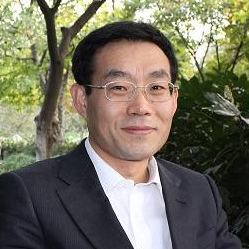
Speaker:
Dr. Fengchun Miao, Chief, Unit for Technology and AI in Education, United Nations Educational, Scientific and Cultural Organization (UNESCO), Paris
Date & Time:
14:10 - 15:00 (UTC+8), 15 May 2026 (Friday)
Venue:
Rayson Huang Theatre, The University of Hong Kong (Map)
Language:
English
Facilitator:
Professor Nancy Law, Chair of Learning Sciences and Technology, Faculty of Education, The University of Hong Kong
Abstract
In her keynote address, Inge Molenaar will explore the role of artificial intelligence in education, emphasizing the potential for hybrid human-AI collaboration. At the heart of effective education is the goal of fostering student learning and talent development. To achieve this, it is essential to align theories and scientific insights on learning and teaching with the possibilities offered by AI.
Molenaar will highlight the dual role of AI in education, as a tool and an actor. AI as a tool is used for understanding learners’ learning processes and refining learning theories. AI, as an actor, supports learners during learning and helps teachers improve their teaching. A significant gap exists in the application of theories and scientific insights in AI-empowered educational technologies. Only 50% of learner-facing solutions and 33% of teacher-facing solutions are grounded in these theories, indicating substantial room for improvement.
In her talk, Molenaar will outline how to design AI in education to connect learning theories and scientific insights with the possibilities of AI. She will contrast the replacement and augmentation perspectives and address the consequences of AI automation on teacher and learner autonomy. Through compelling examples, she will illustrate how AI in education can lead to the replacement, complementation, and augmentation of teachers and learners.
Moreover, she will propose an innovative approach to investigate the complex interplay among AI, teachers, and students, providing a practical framework for integrating AI’s dual role with the established scientific understanding of learning and teaching. This alignment may help to cultivate responsible educational practices that empower students to realize their full potential.
About the Speaker
Dr. Fengchun Miao is the Coordinator of UNESCO International Institute for STEM Education, the Chief for technologies and AI in education of UNESCO since 2011. He is also a Professor in AI in Education at Beijing Normal University.
He has been playing a defining role in shaping global policy agenda for 20 years. He authored a unique set of frameworks to promote human agency, inclusion, quality, and system effectiveness covering ICTs in education, Open Educational Resources, mobile learning, distance learning during COVID-19 crisis, the international consensus on AI and education, AI especially generative AI in education, and AI competency for teachers and students. He guided more than 80 countries to prepare for the COVID-19 disruptions and his AI competency frameworks opened an AI competency-focused new age. His publications are among the most cited references worldwide (5100+ citations in five years) and the most read titles in UNESCO.
He has convened more than 30 international conferences or workshops, reaching more than 20 000 policymakers from over 150 countries. He supported up to 50 countries for the drafting of frameworks, prioritizing AI skills building for advantaged students.
Prior to UNESCO, he was the Director of the national centre for digital learning in China, leading the introduction of AI into K-12 curriculum which contributed to the AI competency foundation behind the recent booming of local AI models in China.
